
The considered wardrobe
How to Build a Barefoot Capsule Wardrobe: 7 Shoe Styles for Everyday Outfits
Seven useful barefoot shoe roles, outfit formulas, fit checks and a realistic way to buy fewer pairs.
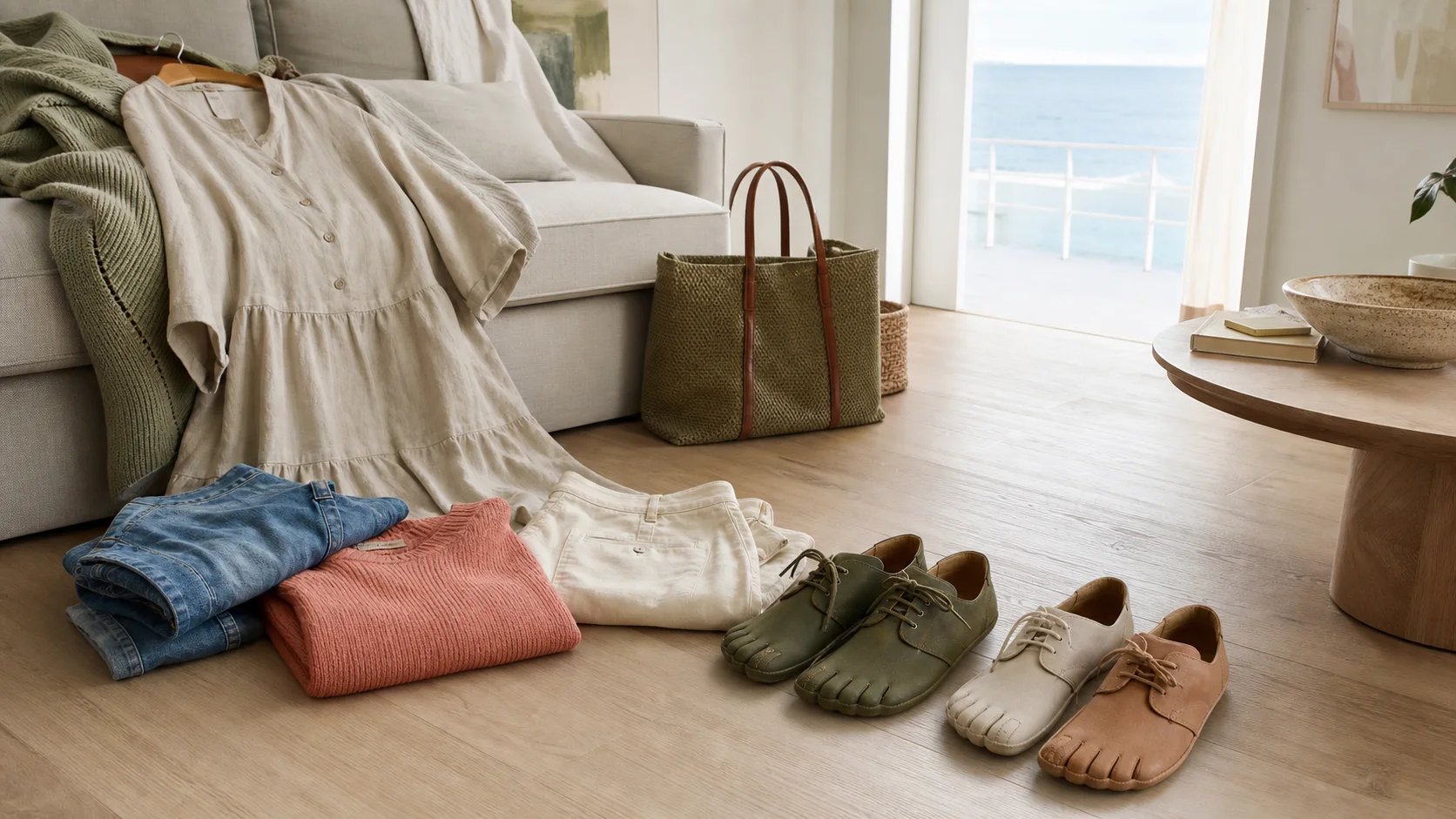
The short answer: build around jobs, not trends
A useful barefoot capsule is not a row of nearly identical neutral trainers. It is a small group of shoes with clearly different jobs: one clean everyday sneaker, one polished flat or loafer, one warm-weather option, one weather-ready pair and, only when your routine demands it, a sport or trail shoe. Seven styles is a ceiling rather than a target. Many wardrobes work better with four or five.
Start with the week you actually live. Count office days, school runs, long walks, dinners, wet commutes and trips. Then assign one shoe to each recurring situation. A pair earns its place when it works with at least three outfit formulas and can be worn for several hours without rubbing, pinching or changing how you move to avoid discomfort. That is more useful than buying a fashionable silhouette that only works with one photograph.
1. The quiet everyday sneaker
The first role is a low-profile sneaker in a colour already repeated in your wardrobe. Cream, soft white, brown, black or muted olive usually integrates more easily than a bright athletic colourway. Look for a toe box that follows the foot rather than tapering sharply, a secure heel and enough volume over the toes. Wide does not simply mean buying a longer size.
This is the pair for straight denim, relaxed tailoring, cotton dresses and simple sets. Keep the upper visually calm: limited branding, tonal laces and a sole that does not look excessively technical. Before choosing, compare real photographs and proportions in an independent stylish barefoot sneaker guide. The value of a review is not a universal winner; it is seeing how a model looks on foot, who its shape may suit and where its limitations sit.
2. A polished flat or barefoot loafer
A capsule needs an option that does not read as a trainer. A flexible loafer, simple lace-up, Mary Jane or ballet-inspired flat can bridge soft tailoring and dresses. The important distinction is between visual polish and restrictive construction. A pointed outline may look elegant on a shelf but compress toes once weight is applied.
Try the shoe with the trousers and dress lengths you already own. A very low vamp can shorten the visual line under a wide trouser, while a higher vamp often works with cropped shapes. With dresses, repeat one element of the shoe elsewhere: dark leather with a belt, warm suede with a woven bag, or a berry flat with a small print detail. The outfit feels intentional without becoming matched from head to toe.
3. The warm-weather sandal
For heat, choose the amount of exposure according to real walking. A barely-there sandal may be perfect for dinner but frustrating on cobbles or a full sightseeing day. A secure heel strap and adjustable forefoot usually make a sandal more versatile. Check that the sole bends where your foot bends, but also that it protects against the surfaces you will actually meet.
A muted leather or textile sandal can sit beside matching sets and linen without looking sporty. Keep enough space in front of the longest toe and make sure no edge catches the little toe. FootCareMD advises assessing fit while standing and walking, not relying only on the printed size. That matters especially in sandals, where a foot can look as if it fits while spilling over the platform in motion.
4. A transitional boot
The most efficient cold-season option is usually an ankle boot rather than several specialised pairs. A plain Chelsea, lace-up or chukka shape works with denim, knitted dresses and wide trousers. Test ankle movement, heel hold and sock volume. A boot can have a generous toe box yet still be uncomfortable if its shaft rubs or its instep is too shallow.
Material changes the wardrobe role. Smooth leather or a convincing alternative looks more polished and is easier to wipe after rain; suede feels softer but needs more care; textile can be light but may be less useful in prolonged wet weather. Ask whether the outsole can be repaired and whether insoles and laces are replaceable. A capsule is strongest when maintenance is part of the purchase decision.
5. A travel shoe that handles imperfect days
Travel exposes weak choices quickly: swelling, long queues, different pavements and weather changes all arrive in one day. A travel pair should be familiar before departure, easy to clean and compatible with the socks you pack. It also needs enough grip for the itinerary. Thin and flexible does not automatically mean suitable for polished stone in rain or loose coastal paths.
Use a simple packing test. Lay out three bottoms and three tops from your resort wear edit, then check whether the shoe works with at least six combinations. Walk for an hour on mixed surfaces before giving it suitcase space. If you need to change your stride, add a blister plaster immediately or feel pressure under one metatarsal, it is not yet the dependable travel pair.
6 and 7. Activity-specific pairs only when earned
A gym shoe and a trail shoe can be legitimate capsule members, but only if those activities are part of your routine. The gym pair needs lateral security and a sole appropriate to your sessions. The trail pair needs grip, upper protection and fit that remains stable on descents. An everyday lifestyle shoe should not be promoted into either job because its colour looks right.
Transition gradually if minimalist footwear is new to you. The American Podiatric Medical Association emphasises choosing footwear for the activity and seeking professional advice when pain persists. A capsule should simplify getting dressed, not turn discomfort into a test of commitment. Keep the conventional pair that works while you learn what your feet tolerate.
A seven-style decision table
| Role | Best with | Check before buying |
|---|---|---|
| Everyday sneaker | Denim, dresses, relaxed tailoring | Toe shape, heel hold, visual simplicity |
| Polished flat | Office, dinners, midi skirts | Forefoot width and vamp position |
| Sandal | Linen, resort looks, heat | Secure straps and surface protection |
| Ankle boot | Knits, denim, wet months | Sock volume, shaft comfort, repair |
| Travel shoe | Repeat outfits and long days | Proven comfort and realistic grip |
| Gym shoe | Strength or movement sessions | Lateral security for the activity |
| Trail shoe | Unpaved routes | Lugs, upper protection, downhill fit |
Care, rotation and the honest sustainability test
The most sustainable pair is not automatically the one with the most ecological claims. It is the appropriate pair that gets worn, maintained and kept in use. WRAP treats extending product life and reducing unnecessary consumption as central parts of a more circular textiles system. Apply that thinking to footwear by rotating damp pairs, cleaning the correct material, replacing laces and dealing with a loose edge before it becomes structural damage.
Record cost per wear for three months. If a shoe looked versatile but remains untouched, identify why: colour, fit, dress code or weather. That information is worth more than another recommendation list. A barefoot capsule succeeds when it makes normal mornings easier, respects the shape and needs of your feet, and leaves enough room for personal style.
Frequently asked questions
Do I need seven pairs?
No. Seven describes possible roles. Start with the smallest number that covers your real week without forcing one pair into unsafe or inappropriate use.
Should every shoe be zero drop?
Not necessarily. Fit, health history, activity and a gradual transition matter more than following one specification across every situation.
How much room should be in the toe box?
Your toes should not touch or spill over the sides when standing and walking. Use each brand's measurements and test both feet.