Beach style guide
Best Beach Cover Ups for Women: 10 Styles to Pack
The best beach cover ups for women are not just pretty layers over swimwear. They solve real vacation problems: getting from room to pool, sitting down for lunch, managing wet fabric, adding coverage and keeping a small suitcase useful.
Quick Answer
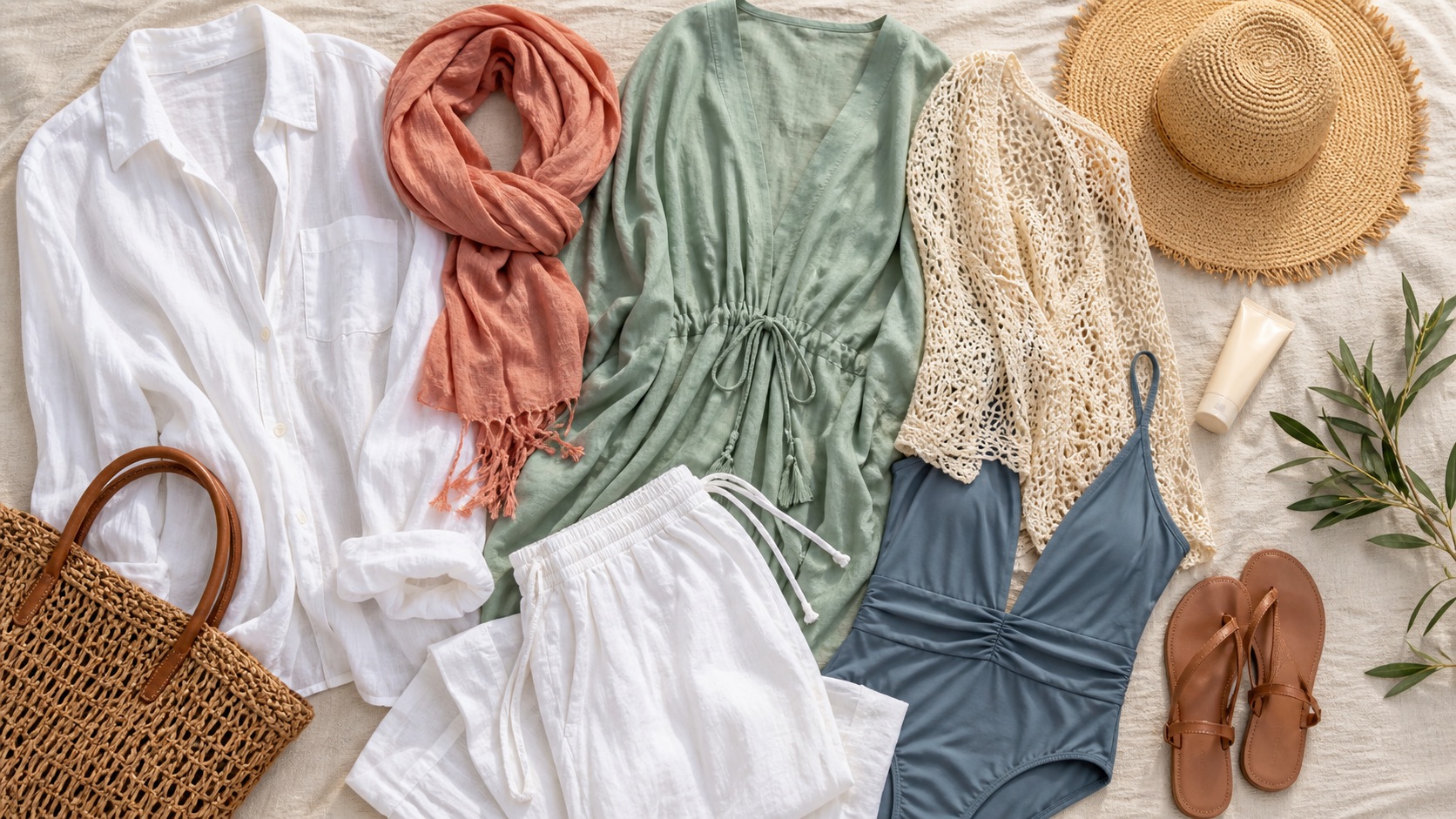
For most beach trips, the best cover ups are a linen button-down, a secure sarong, a breezy shirt dress, a relaxed kaftan and one easy pull-on bottom or matching set. Choose by opacity, fabric weight, closure, care label and whether the piece can move from sand to lunch without feeling like a costume.
Current search results for beach cover ups are mostly editorial commerce roundups. Vogue organizes the category around caftans, tunics, dresses, crochet, pants, button-ups, shorts, wraps, terry pieces and matching sets. Travel + Leisure's tested cover-up guide leans heavily into travel usefulness, with sections for dresses, tops, shorts and pants, jumpsuits, rompers and sarongs. Harper's Bazaar and Condé Nast Traveler both emphasize the same practical promise: a strong cover up should work beyond the beach, not only for a towel photo.
That is the right intent to follow, but many roundups still leave shoppers with too many products and not enough decision criteria. This guide focuses on the type of cover up rather than a single brand ranking. It is built for readers comparing what to buy, what to pack and what to skip before a warm-weather trip.
A cover up also sits close to comfort and confidence. It should make a swimsuit feel easier to wear, not turn every beach day into an outfit puzzle. If you already own a useful white shirt, pull-on skirt or soft dress, start there before buying another vacation-only piece.
Beach Cover Up Comparison
| Cover up style | Best for | Why it works | Watch for |
|---|---|---|---|
| Linen button-down | Pool, travel, casual lunch | Breathable, repeatable and easy to style open or buttoned | Sheerness and wrinkling |
| Sarong or pareo | Beach bags, resorts, quick changes | Very light, adjustable and compact | Wind, slipping and limited coverage |
| Shirt dress | Beach-to-lunch plans | Reads more like clothing than a swim layer | Button gaps and damp transparency |
| Kaftan or tunic | Resort terraces, relaxed dinners | Airy shape with more coverage | Too much volume in wind |
| Crochet or mesh layer | Pool style, beach clubs, texture | Lightweight and visually interesting | Snags and low opacity |
10 Best Beach Cover Ups for Women by Use Case
1. The linen button-down
A linen or cotton button-down is the easiest cover up to justify because it keeps working after the vacation. Wear it open over a swimsuit, buttoned with pull-on shorts, tied at the waist with a skirt or layered under a sweater on the plane. It does not need to be marketed as swimwear to be useful at the beach.
The buying test is closure. If the shirt only looks good open, it is less versatile than one that buttons without pulling. Choose a length that covers the seat if you want it to function as a pool layer, and check the fabric in daylight over dark swimwear. The relaxed resort direction at Barefoot Bestie Label fits this same repeat-wear logic: quiet pieces should do more than one job.
2. The secure sarong or pareo
A sarong is the lightest cover up in the suitcase. It can become a skirt, scarf, shoulder wrap, beach mat or emergency layer when a swimsuit feels too exposed. For carry-on packing, that flexibility matters more than drama.
Look for a fabric that ties firmly and dries reasonably quickly. Very silky wraps can loosen while walking, while bulky cotton can hold sand and moisture. A medium-weight cotton, gauze or viscose pareo often gives the best balance. Sarongs are excellent for beach cafes and resort paths, but they are not always enough for windy walks or places with stricter dress codes.
3. The shirt dress cover up
A shirt dress is one of the safest answers when you want a beach cover up that can pass as real clothing. It gives more structure than a tunic and more coverage than a wrap. It also works with flat sandals, a tote and earrings when lunch is part of the plan.
Check button placement before you buy. Gaps at the chest or hips become more obvious over a swimsuit, especially when the fabric is damp. A curved hem can look polished, but a straight or slightly longer hem is often better for coverage. For dress-specific packing ideas, compare our guide to best beach vacation dresses.
4. The relaxed kaftan
A kaftan works when you want airflow, ease and coverage in one piece. Shorter kaftans are simple pool layers; longer versions can feel elegant for a beach club, cruise deck or casual sunset drink. The shape is forgiving after sunscreen, salt water and a long lunch.
Volume is the tradeoff. A very wide kaftan can catch wind, drag through sand or feel too theatrical for town. Choose one with side seams, sleeve shape or a drawstring if you want more control. A washable cotton or linen blend is usually easier to live with than a delicate embellished piece.
5. The crochet or mesh layer
Crochet and mesh cover ups dominate many current roundups because they add texture without much weight. They are good for poolside style, beach clubs and layered resort outfits where the swimsuit is meant to remain visible.
They are less practical when you need coverage, warmth or durability. Open knit fabric can snag on jewelry, woven bags and deck chairs. It also rarely solves opacity. Treat crochet as a styling layer, not as the only clothing you will wear from the beach to town.
6. The pull-on beach pant
Lightweight pants are underrated beach cover ups for women who want more leg coverage. They work well for ferries, shaded lunches, markets and resorts where swim bottoms alone feel too bare. A drawstring waist also makes them easier to pull over damp swimwear than fitted trousers.
Fabric weight is everything. Choose airy cotton, linen, gauze or a quick-dry technical fabric, and avoid thick knits that trap heat. The Vogue cover-up guide includes poolside pants as a meaningful category, which reflects how beach dressing has moved beyond the tunic-only idea.
7. The matching cover up set
A matching shirt and short, skirt or pant set can be the most efficient option if both pieces work separately. Worn together, it looks intentional. Split apart, the shirt can cover swimwear and the bottom can pair with a tank or one-piece swimsuit.
Keep prints controlled unless you love repeating a statement. A neutral set, stripe or small-scale print will usually mix with more swimwear. If your broader suitcase needs more outfit formulas, our guide to tropical vacation outfits covers how to build looks around repeatable pieces.
8. The beach skirt
A pull-on or wrap skirt is more stable than a sarong but still lighter than a full dress. It works especially well with one-piece swimsuits because the top half already feels like a bodysuit. Add a linen shirt or tank and the outfit can move from beach chair to lunch without much effort.
Length changes the use case. A mini skirt is easy near the pool, a midi feels more polished, and a maxi can be elegant but may collect sand. Check lining and waistband comfort. Thin white skirts are often less forgiving once they meet salt water and sunscreen.
9. The terry cloth layer
Terry cover ups are practical when the day is mostly towel, pool and room service. A terry shirt, short or simple dress can absorb moisture and feel casual in a useful way. It is not the most polished option, but it handles real beach friction well.
The downside is bulk. Terry takes more suitcase space and may dry slowly in humid rooms. It is best for road trips, resort stays with enough luggage room or destinations where you will reuse the same pool layer every day.
10. The beach-to-dinner dress
Some cover ups are really lightweight dresses, and that can be a good thing. A cotton poplin mini, breezy midi or simple gauze maxi can cover a swimsuit by day and work with sandals after sunset. This is the strongest option when you want fewer pieces in the suitcase.
Be honest about the fabric. If it clings after water or needs special undergarments, it is not a low-effort cover up. For broader dress comparisons, see our resort wear dresses guide.
How to Choose a Beach Cover Up Before You Buy
Match the cover up to the strictest setting
If you only need to walk from hotel room to pool, almost any comfortable layer works. If you plan to sit down for lunch, walk through a lobby, board a boat or shop near the beach, choose the piece that fits that stricter setting. The best beach cover up is the one you will not need to change out of immediately.
Check opacity in realistic conditions
Try the cover up over your actual swimsuit or a similarly dark base. Thin white fabric, crochet, eyelet and mesh can look different in sunlight than they do indoors. The Skin Cancer Foundation notes that fabric construction, fit, coverage, color, UPF and wetness all affect sun protection, so do not assume a sheer layer protects like UPF clothing.
Read the care label before packing
Beach clothes meet sunscreen, sweat, salt, chlorine and sand. That makes care instructions more important than usual. The FTC Care Labeling Rule requires care instructions for covered textile wearing apparel, and those labels can tell you whether a cover up is realistic for repeat travel wear.
Prioritize closures, pockets and secure straps
Ties, buttons, snaps and waistbands decide whether a cover up works in motion. A pretty wrap that loosens every ten steps will be annoying by day two. Pockets are not essential, but they help when you are carrying a room key, lip balm or sunglasses between pool and cafe.
Decide how many you actually need
Most trips do not require a different cover up for every swimsuit. Two or three are enough for many vacations: one quick-dry layer, one polished lunch-friendly piece and one backup. If you are building a warm-weather capsule, the resort wear category is a better starting point than buying one-off beach pieces.
What I Would Skip
Skip cover ups that require special underwear, have fragile embellishment, cannot be washed, shed threads, drag in sand or only look good while standing still. Also be careful with pieces marketed as beach-to-dinner if they are completely sheer. They may be stylish, but they will not solve the practical problem.
The stronger purchase is usually quieter: a washable shirt dress, a good sarong, breathable pants, a kaftan with shape or a matching set that splits into separates. Those pieces give you more combinations with fewer clothes.
FAQs
What is the best beach cover up for women?
The best option depends on the trip, but a linen button-down, shirt dress, sarong or kaftan is usually the most versatile. Each can cover swimwear, pack reasonably well and work for casual beach-adjacent plans.
Can you wear a beach cover up to lunch?
Often, yes, if the cover up is opaque, secure and shaped like normal clothing. A shirt dress, kaftan, linen set or pull-on pants outfit is usually safer than a very sheer mesh or crochet layer.
Are sarongs better than cover up dresses?
Sarongs are better for packing light and quick beach changes. Cover up dresses are better when you want more coverage and polish. Many travelers benefit from packing one of each rather than choosing only one style.
What fabric is best for beach cover ups?
Cotton, linen, gauze, ramie, viscose and some quick-dry technical fabrics can all work. The best fabric depends on whether you value breathability, fast drying, opacity, wrinkle resistance or washability most.
How do I avoid overpacking beach cover ups?
Pack by role: one fast beach layer, one lunch-ready layer and one backup if needed. Then make sure each cover up matches at least two swimsuits and one pair of sandals.
Pack Cover Ups That Earn Space
A good cover up should make beach days easier, not add another fragile outfit to manage. Start with the pieces you can repeat, then use the shop, dresses edit or lookbook when you need a warm-weather layer that still works after the trip.