Style journal
How to Style Barefoot Sneakers with Dresses: 7 Everyday Outfit Ideas
Barefoot sneakers and dresses work well together when the outfit looks intentional. The shoe does not need to imitate a narrow fashion trainer, and the dress does not need to become sporty. The connection usually comes from proportion, color and one repeated casual detail.
Updated August 14, 2026 · By Barefoot Bestie Label
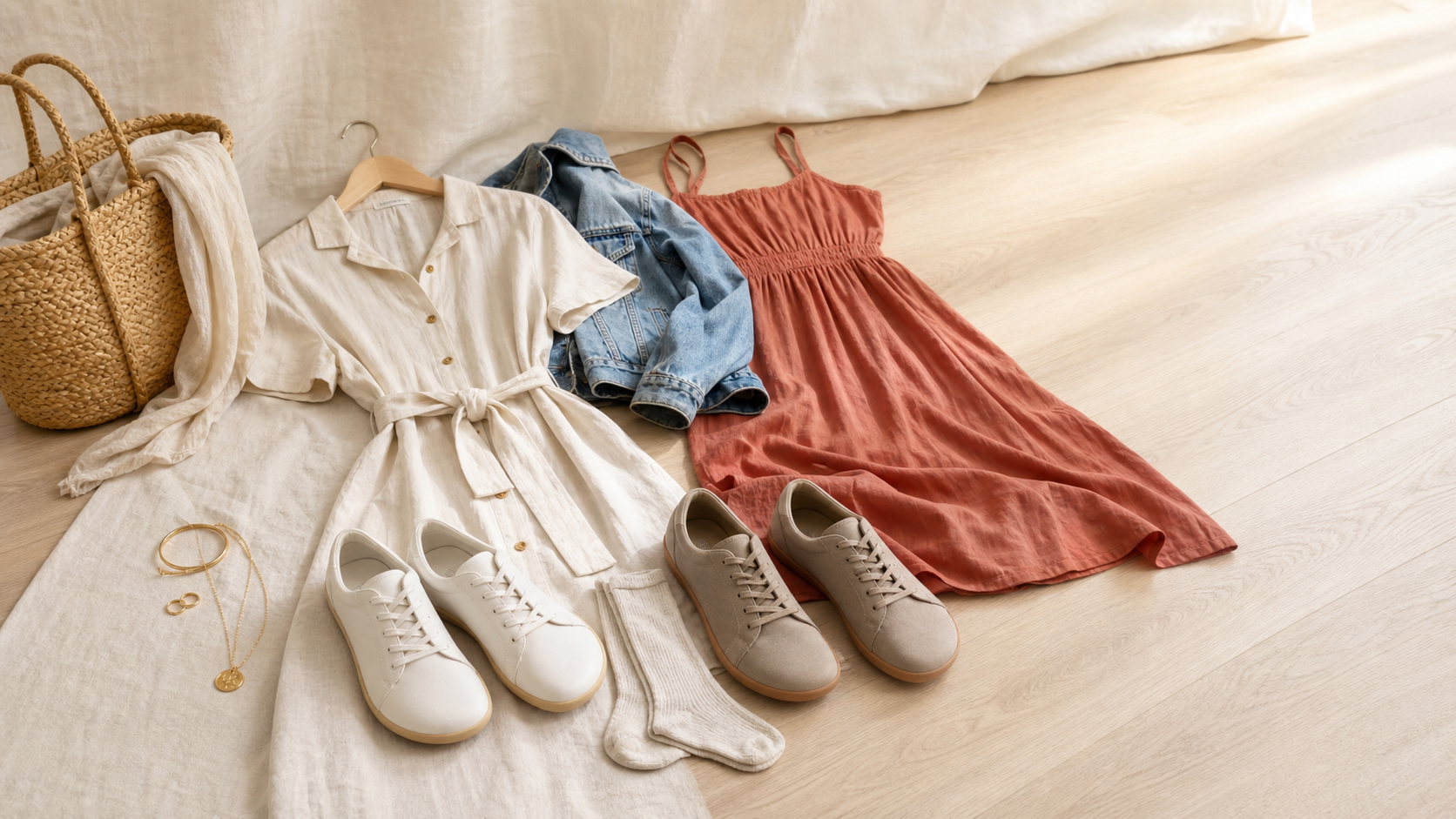
Barefoot sneakers and dresses work well together when the outfit looks intentional. The shoe does not need to imitate a narrow fashion trainer, and the dress does not need to become sporty. The connection usually comes from proportion, color and one repeated casual detail.
Because barefoot shoes sit closer to the ground and leave more room through the toe box, they create a softer outline than many platform sneakers. That can make a dress feel relaxed and modern, especially when the rest of the outfit is kept simple.
The seven formulas below are designed for repeat wear. They use pieces that can move between weekends, travel, errands and informal dinners instead of creating a one-off look around a single pair of shoes.
Before building the outfit
First, look at the sneaker's visual weight. Thin canvas and knit shoes suit airy fabrics and simple day dresses. Leather and suede models can support heavier poplin, denim, sweater dresses and layered autumn outfits. Retro runners add more color and texture, so they work best when the dress is relatively quiet.
Second, decide where the dress should end. Midi lengths are the easiest because they show enough ankle to separate the hem from the shoe. Maxis can work when the fabric moves and the hem does not pool. Minis create more visual space around the sneaker, so socks and color become more noticeable.
Finally, repeat one idea. Match the sneaker to a stripe, belt, bag, jacket or jewelry tone. The colors do not have to be identical; they only need to feel related.
1. Linen shirtdress, soft white sneakers and a woven tote
A linen shirtdress already has the right balance of polish and ease. Add a low-profile sneaker in soft white, cream or pale stone rather than a brilliant optical white. The gentler shade sits more naturally beside linen and makes small marks less distracting.
Roll the sleeve once, leave the collar open and carry a woven tote or simple leather crossbody. If the dress is loose, a narrow belt can define the waist without making the outfit formal. Invisible socks keep the line clean, while a fine ankle sock can add a deliberately preppy note.
2. Cotton poplin midi, taupe sneakers and a light knit
Poplin has more structure than linen, so it can handle a sneaker with a little more substance. Taupe, mushroom and muted tan are useful because they soften bright blue, green, red and striped dresses without introducing another sharp contrast.
Wear a lightweight knit over the shoulders or tie it loosely at the waist. The extra layer gives the shoe another casual element to relate to. Keep the bag compact if the dress has volume; an oversized tote, full skirt and broad shoe can make the outfit feel visually heavy.
3. Black tank dress, black sneakers and warm metal jewelry
A simple black tank dress is the easiest place to try a monochrome combination. An all-black barefoot sneaker creates one continuous line and avoids the gym-shoe effect of a bright white sole. Gold or brass jewelry stops the outfit feeling flat, while a tan or burgundy bag adds warmth.
This formula works particularly well for travel because every piece can be reworn. Add an open shirt for the plane, swap the bag for a tote during the day, and use a smaller shoulder bag for dinner.
4. White summer dress and a muted retro sneaker
A white dress can look overly sweet with a delicate shoe and overly athletic with a running trainer. A muted retro sneaker lands between the two. Look for suede, mesh or softly contrasting panels in sand, navy, faded green or chocolate.
Several barefoot labels now use this familiar runner language. A pair from Lejan Brand is one option to compare alongside Groundies, Shapen and similar lifestyle brands; the useful test is whether the last suits your foot and the colors genuinely work with the clothes you already own.
A denim jacket or chambray shirt makes the combination feel deliberate. Avoid adding too many other sporty details. The sneaker should be the relaxed counterpoint, not the beginning of a full gym outfit.
5. Slip dress, leather sneaker and oversized shirt
The contrast between a fluid slip dress and a plain leather sneaker can feel modern rather than mismatched. Choose a low-cut shoe with minimal branding and keep the palette narrow: ivory with tan, black with black, or navy with cream.
Wear an oversized button-down open over the dress for daytime. The shirt adds coverage and gives the structured shoe a partner. For evening, remove the shirt, add a small bag and keep the sneaker spotless. This is smart casual, not formalwear, so it works best for relaxed restaurants and holidays.
6. Sweater dress, suede sneaker and ribbed socks
In cooler weather, a suede or brushed-texture sneaker feels more convincing than lightweight mesh. Pair it with a straight or gently fitted sweater dress and ribbed socks that either match the shoe or echo the dress.
The sock should look chosen. A tiny strip of random sports sock can interrupt the outfit, while a visible rib in cream, charcoal, burgundy or forest green adds texture. Finish with a wool coat, quilted jacket or cropped cardigan depending on the dress length.
7. Printed day dress and one repeated sneaker color
Prints become easier when the shoe repeats the least dominant color rather than the background. A floral dress with a small olive detail can take an olive or taupe sneaker; a navy print can work with cream panels and navy laces.
Keep the rest quiet. One plain bag and simple jewelry are enough. If the print is already busy, avoid a sneaker with several contrasting materials, visible trail lugs or a brightly colored outsole.
Socks, hemlines and practical fit
No-show socks give the cleanest summer line, but they need to stay in place. For walking, a thin crew sock can be more comfortable and can look intentional with shirt dresses, sweater dresses and retro sneakers. Match the sock to the shoe for a longer line or to the dress for a more styled effect.
Leave enough room around the ankle. A midi hem that ends at the widest part of the calf can make any low shoe look heavier. Slightly shorter or longer often works better. With a maxi, check the hem while walking so it does not catch under the sole.
Comfort still depends on fit. A wide toe box is useful only when the heel is secure and the upper volume matches your foot. If you are changing from raised, cushioned shoes to a flatter and more flexible pair, introduce longer walks gradually rather than testing the outfit on an all-day itinerary.
A simple capsule approach
One neutral barefoot sneaker can cover most casual dresses if its materials suit the season. Before buying, place three real dresses on the bed and imagine the complete outfits, including socks, outerwear and bag. If the shoe only works with one item, it is probably not the versatile purchase it appeared to be.
The most successful combinations do not hide the shape of the shoe. They let it look relaxed, repeat one visual cue elsewhere and keep the rest of the outfit edited. That is enough to make barefoot sneakers feel like part of a wardrobe rather than a special category.